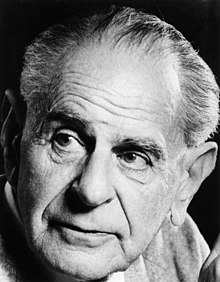
I recently read the book Unended Quest which is an intellectual autobiography of Karl Popper. Karl Popper is likely the most influential philosopher of science ever. The book is a good mix of details of his life, accounts of his interactions with some famous scientists and philosophers, and explanations of his own big ideas. I highly recommend it. One of the first ideas Popper remembered pondering during his younger years was the amount of time spent on precisely defining words. Interestingly enough, this turned into a passion of his as he aged, when analytical philosophy was just beginning to catch on in Europe. With Wittgenstein leading the way, it became a prominent characteristic of the analytical school of philosophy to rigorously define all technical terms ahead of time in order to prevent misunderstandings during the presentation of a theory or argument. Popper was notably against this trend, arguing that it amounted to a waste of time and effort.


Part IV of this series ended with somewhat of a cliffhanger.  Marx and Freud seemed to think that religion arose through purely naturalistic processes.  Not only that, but the aim of religion was not truth, but something less legitimate - for Marx it was an escape from the harsh reality of existence, and for Freud it was "wish fulfillment."  At any rate, this all makes religion irrational, whether or not it's true.  This Alvin Plantinga came to call the de jure objection.  The root issue is whether or not religious belief - and Christian belief in particular - has any justification.
It is the glory of God to conceal things,
but the glory of kings is to search things out. 
-Prov. 25:2, ESV

Often when studying theology, especially some of the more controversial doctrines of Christianity, I can get pretty discouraged. Occasionally, it will get bad enough that I even begin to doubt the Christian faith as a whole. If Christians have not been able to come to an agreement on a doctrine after two millennia of study and discourse, how can I be sure that there is a correct stance to begin with? Things certainly don’t seem so ambiguous and confusing in other knowledge seeking enterprises, so why wouldn’t they also be straightforward with theology? Depending on the doctrine itself, the intensity of this period of doubting has varied from thought-provoking to panic-inducing. Recently, while studying the doctrine of divine providence, I had a spell of this, though it was on the minor end of the spectrum. While thinking through this specific issue, and the larger meta-issue, I had some thoughts that might be helpful for Christians in similar situations.