Showing posts with label personal/devotional. Show all posts
I've been thinking a lot about sin and the Christian fight against it recently, and I think I came up with a good analogy. The analogy has come from my recent study and love of classical history.


It is said that Alexander the Great never lost a single battle in his campaign to conquer the known world. The Macedonians had already successfully reformed ancient Hellenic warfare under his father Phillip II, but with the young Alexander as general over the Macedonian army, they were virtually unstoppable. The fact that he never lost a battle, like many historical facts, is disputed, but I will ignore those arguments for now because they ruin my analogy.

Now let's contrast the greatness of the Macedonian army under the leadership of Alexander, with the Roman army in the middle and late Republic. Rome had some massive defeats in battle. A couple big ones that come to mind were the defeat by the Hellenic kingdom of Epirus under King Pyrrhus (from which the phrase "Pyrrhic Victory" comes), and of course several decisive battles lost to the Carthaginians during the Second Punic War. This one is especially interesting. It is known for the Carthaginian commander Hannibal marching his army up the Iberian Peninsula, and entering Italy by crossing the Alps to the North rather than invading by sea as everyone would have expected (if only the Romans had their own Paul Revere, eh?). Hannibal had some massive victories in Italy, but ultimately failed to take Rome, and was defeated by the Roman army under Scipio Africanas at the battle of Zama.

So why was Rome able to persevere? Ultimately, I think, because they were so persistent and tenacious, but also because of the vast resources at their disposal. First of all, surrender was not something that was entertained by the ancient Romans. No matter how many losses they suffered, they would continue to fight until they had attained victory, or been soundly defeated (ie. the city of Rome being captured). Second, through earlier campaigns, the Romans had set up an impressive network of loyal allies and tributaries from which to draw soldiers and other resources in a time of great need. An entire legion defeated at some battle? No worries, just form another one! (Side note: one of Carthage's strategies was to turn those allies and tributaries against Rome. This had some benefit, but many of those territories shifted their loyalty back to Rome in the end, and it wasn't enough).

So with the history out there, I will explain why I chose this analogy. Many Christians approach the fight against sin the way Alexander approached his campaign in the East. Perfection is our goal, and anything less is unacceptable. The problem is that this is a completely unrealistic and unattainable standard for us Christians who, though justified through Christ, and though in the process of being sanctified, are still at war with their flesh and living in a world inundated by the brokenness caused by sin. Perfection before the general resurrection when we will receive glorified bodies is simply not going to happen. But when that's what we strive for, and that's what we expect, we are sorely disappointed.

And the enemy uses that disappointment against us. One of my favorite passages of Scripture is Zechariah 3:
Then he showed me Joshua the high priest standing before the angel of the Lord, and Satan standing at his right hand to accuse him. And the Lord said to Satan, The Lord rebuke you, O Satan! The Lord who has chosen Jerusalem rebuke you! Is not this a brand plucked from the fire? Now Joshua was standing before the angel, clothed with filthy garments. And the angel said to those who were standing before him, Remove the filthy garments from him. And to him he said, Behold, I have taken your iniquity away from you, and I will clothe you with pure vestments. And I said, Let them put a clean turban on his head. So they put a clean turban on his head and clothed him with garments. And the angel of the Lord was standing by.
Satan will continue to try to destroy us by accusing us of our wrong. Even though we are justified through Christ, and Satan knows this, we will be accused.  And if we set the standard of perfection for ourselves, and are not prepared to live in God's grace when we fail, his attacks may just be successful.

We need to approach our war with sin the Roman way. Although we will be defeated in battle, we cannot give up. We cannot surrender. There will be casualties, there will be losses, there will be pain, there will be heartache. We will hurt ourselves and others through our failures. But we cannot give up. And we have two types of hope that will allow us to persevere in the war, one that even the Romans did not have.

Like the Romans, we have a vast depth of resources at our disposal. We have the Spirit of God living inside us, a deposit of the inheritance that we will receive as Children of God. This Spirit gives us access to the character needed to fight against sin: love, joy, peace, patience, kindness, goodness, faithfulness, gentleness, and self-control (Galatians 5). We also have the armor of God: the Belt of Truth, the Breastplate of Righteousness, the Shield of Faith, the Helmet of Salvation, and the Sword of the Spirit. This armor, above all else, allows us to stand our ground against the Enemy. We have Scripture, which is God-breathed, and therefore useful for teaching and training in righteousness.

With all these at our disposal, a defeat in battle should not cause us to surrender. Rather it should cause us to dig deeper and revitalize ourselves with the wonderful array of resources given to us for this war!

Additionally, unlike the Romans or any worldly army, we have the benefit of foreknowledge: we know that victory was already secured at the Cross, and now it is only a matter of that victory being consummated! We fight as soldiers knowing that there is literally no way in Hell, or on Earth, we can lose the war!

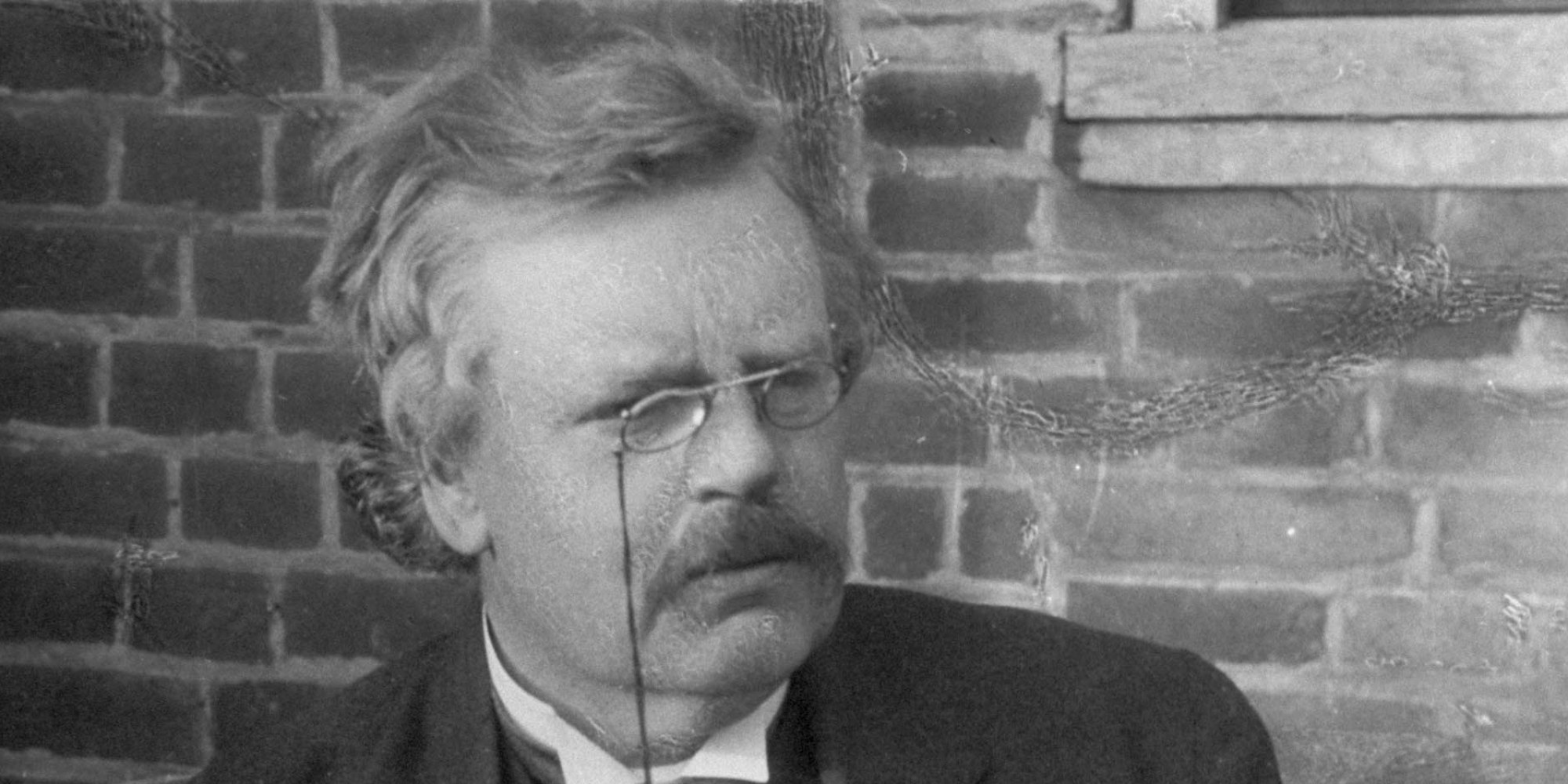
I once had a mentor remark that we should, at some point in our spiritual development, form a theology of every part of life. A theology of thinking, a theology of work, a theology of eating, a theology of fellowship. You get the idea. If we are to give our lives fully to God, we are to base our thoughts and actions in every aspect of life on our Christian faith and our ideas about God. We are not to be compartmentalists, in which our faith occupies just one part of our lives. Rather, it should inform - nay, reform - every facet of our being.

To this end, one question we should ask ourselves is, "As Christians, what role do art, entertainment, and leisure have in our lives?" This has been an important question for those who fear God throughout history. But it seems especially significant today. I haven't done any great study on the free time of humanity throughout history, but I suspect we enjoy more of it now than in any other point in history. And because it occupies so much of our time and thought, we had better have a clear understanding of how it should be used to glorify God and edify his people.

I think you'll agree that in many ways our culture's obsession with leisure and entertainment has done some serious damage, and the church has not been spared. There are many instances in which some form of entertainment or way of life has entered into the church without much thought given to it, almost as if it entered through some form of osmosis. The walls of the church ought not be so permeable. Instead we should be vigilant about what makes its way into our lives, lest temptation and sin find yet another foothold. At the same time, we should not shut out all entertainment from our lives. I believe it can be beneficial, and that good entertainment can bring us towards God in a way that simply putting our nose to the grindstone every day can't.

Before we continue, I should mention two things. the first is that I won't spend any time discussing the definitions of art, entertainment, and leisure. The semantic issues don't interesting me, and I trust you have somewhat of an understanding of what the words "art," "entertainment," and "leisure" mean. There are some who may paint one of these in a positive light and another in a negative light in order to make a point, but I'm fine with lumping them all together for the sake of simplicity. Secondly - and this should be pretty obvious - this blog post certainly won't be the final answer on the subject. I'm sure many books could be written on the subject of our theology of entertainment. I only want to get us thinking about it, and to realize the importance of thinking about it.

Now, to answer the question "what role do art, entertainment, and leisure have in our lives?" we first have to answer a few other questions. What is the purpose of entertainment? Is it of any profit? Should we instead just work, study, and serve all day every day?

Entertainment in part gives us a break from the rigors of life. Long work days and many responsibilities are often draining. The right entertainment can also be immensely edifying. On more than one occasion, after a particularly amazing classical music concert, I have heard another Christian remark that such amazing music so wonderfully played in some hard-to-put-your-finger-on-it  way gives one a glimpse or vision of heaven, in a way that much of current worship music fails to.

As Christians, we can sometimes feel guilty about entertainment, and that need not be the case. We need rest. Even God took the time to rest after creation, and Jesus had times of rest as well. And entertainment can be a form of rest. Furthermore, entertainment has the ability to fill us with joy and laughter, and even bring us closer to God. Good entertainment doesn't avoid the deep questions. Instead it demands deep introspection. It should drive us towards greater godliness, to deeper relationships, to excellence in all that we do.

Entertainment is not a vacation from being a follower of Christ. I think that has been the downfall of many a Christian. The definite principles that guide how we live as Christians at work, in the marketplace of ideas, as friends and family, as the body of Christ, are all still in play. So what are those principles? Here are a few:
Finally, brothers, whatever is true, whatever is honorable, whatever is just, whatever is pure, whatever is lovely, whatever is commendable, if there is any excellence, if there is anything worthy of praise, think about these things. [Philippians 4:8 ESV]
So, whether you eat or drink, or whatever you do, do all to the glory of God. [I Corinthians 10:31 ESV]
Do not be conformed to this world, but be transformed by the renewal of your mind, that by testing you may discern what is the will of God, what is good and acceptable and perfect. [Romans 12:2 ESV]
Therefore be imitators of God, as beloved children. And walk in love, as Christ loved us and gave himself up for us, a fragrant offering and sacrifice to God. 
But sexual immorality and all impurity or covetousness must not even be named among you, as is proper among saints. Let there be no filthiness nor foolish talk nor crude joking, which are out of place, but instead let there be thanksgiving. For you may be sure of this, that everyone who is sexually immoral or impure, or who is covetous (that is, an idolater), has no inheritance in the kingdom of Christ and God. Let no one deceive you with empty words, for because of these things the wrath of God comes upon the sons of disobedience. Therefore do not become partners with them; for at one time you were darkness, but now you are light in the Lord. Walk as children of light (for the fruit of light is found in all that is good and right and true), and try to discern what is pleasing to the Lord. Take no part in the unfruitful works of darkness, but instead expose them. For it is shameful even to speak of the things that they do in secret. But when anything is exposed by the light, it becomes visible, for anything that becomes visible is light. Therefore it says,
    “Awake, O sleeper,        and arise from the dead,    and Christ will shine on you.”
Look carefully then how you walk, not as unwise but as wise, making the best use of the time, because the days are evil. Therefore do not be foolish, but understand what the will of the Lord is. [Ephesians 5:1-17 ESV]
No doubt you're familiar with these passages. And there are others that come to mind as well (the second half of 1 Peter 1, pretty much all of I Corinthians 10). I really like the list in Philippians 4:8. There is so much in art and entertainment that is lovely and excellent and commendable and noble. Even if it does not give praise to God in so many words, it nonetheless can give him praise through all those great qualities. I think it falls under common grace.

While it isn't my favorite series, I really enjoyed reading the Harry Potter books. In them, you find many noble characters with many kind qualities. You find sinister characters that may succeed in doing evil, but ultimately find a just end. There are many good lessons to be learned in the books. And there are a few gems like this: "Dark and difficult times lie ahead. Soon we must all face the choice between what is right and what is easy."[1] As Christianity Today put it, the books are a modern-day book of virtues with a per-pubescent funny bone.

And do any of us not love great music? There is so much music I find inspiring, encouraging, comforting, thrilling, intriguing...the list could go on seemingly forever. I am convinced that any great peace of music is in some way a reflection of our Creator. He came up with the whole idea of sound waves, after all.

Yes, I even think there are great movies. I think all of us have had the experience of leaving the movie theater wanting to be a better person because of the movie just saw. Now, often those movies will have a message of hope that falls short. Nonetheless, as Christians, we can still be inspired by such movies, for we know the real source of all hope and joy and love, and we are aware that those movies fall short but are pointing towards that which the movie cannot see yet we can.

Obviously most entertainment was not made with the motivation of glorifying God. It may still reflect some of his qualities, but that was not the reason it was made. But for us as Christians, our primary motive in creating and enjoying entertainment is to glorify God, as Paul explains in I Corinthians 10:31. Does it have to explicitly praise him? Of course not. That doesn't even make sense on the face of it. We're also to glorify God by the way we eat; but how do you say "praise God!" while chewing steak without spewing it everywhere? Similarly, our praise of God in entertainment comes by the way we go about it. But feel free to explicitly glorify God through entertainment as well! Bach was amazing at doing both. He set the gospels to some breathtaking music, and he wrote a prolific amount of instrumental music that remains among the best ever written. When listening through Robert Greenberg's Great Courses series on classical music, I was amazed to hear him say that Bach's faith and artistry were so intertwined as to be almost indistinguishable. This is coming from someone who is, as far as I know, not a believer. Talk about an amazing witness!

In short, there is a tremendous amount in entertainment that is worth pursuing. That being said, with the principles in Romans 12:2 and Ephesians 5 in mind, there is a lot we should avoid. And Paul puts those things in no uncertain terms. I don't think I need to elaborate. But it's not just what sort of things we do to entertainment ourselves that is important, it's the purpose of our seeking that entertainment and the amount of time we spend with that entertainment.

If we're seeking some form of entertainment in order to shirk a responsibility we have, even if that entertainment is entirely wholesome, we do disservice to our calling. Our motive in seeking entertainment is important. The amount of time we spend is also important. Netflix binge-ing is almost worn as a badge of honor these days. But sinking an entire weekend just to watch an entire season of a show isn't a terribly good use of time.

Now everything I have said up to this point is fairly clear. Avoid sinful entertainment, pursue praiseworthy entertainment. And for most situations, these principles clearly divide the beneficial from the harmful. But invariably we run into situations in which it isn't entirely clear whether some piece of entertainment is permissible. Say some film has a very solid central message about truth or loyalty, but is pretty heavy-handed with its depiction of violence. Should we subject ourselves to that violence for the sake of the central message of the movie or not? That is not an easy question. And this I think is where a lot of Christians trip up.

Thankfully, the Bible itself provides an example to follow. In it, there is adultery, incest, murder, torture, persecution, lying, thievery, slander, and a ton of other really awful stuff. It doesn't avoid these issues. But it also never, ever praises them. They are there as a warning. They are also there so we can see how God is sovereign over everything, and can work through even the most tragic events towards his good.

And there are yet more principles in the Bible we can turn to, when it comes to what we see as morally grey areas. Consider this passage:
“All things are lawful for me,” but not all things are helpful. “All things are lawful for me,” but I will not be dominated by anything. [I Corinthians 6:12]
Paul here exposes a common mistake when a Christian finds freedom from the law through Christ. This freedom does not give us license to throw away prudence, discernment, and wisdom. We are still to obey, not as a means of attaining salvation, but because we are saved through Christ.

Here's a fairly all-encompassing passage:
For whatever does not proceed from faith is a sin. [Romans 14:23]
I suspect that deep down, with some entertainment we muzzle the Holy Spirit - perhaps not consciously - by justifying or rationalizing the entertainment. "Yes, this show does have a fair amount of sexual content. Well really there's a ton. But the plot is so good. And there are several characters that are very noble." I've noticed in such a situation, the Christian sometimes takes on a air of spiritual maturity. "Perhaps for these weaker Christians this may be harmful, or to the more simple-minded Christians it may be objectionable, but I in my maturity will certainly not be ensnared by whatever evil I find in this entertainment." That is a good clue that we've gotten off track. There comes a point where we need to realize that we are trying to justify something that isn't justifiable.

I hope you're not getting the idea we should avoid entertainment that has any negativity in it. To teach any moral lesson, we have to show the consequences of wrong-doing. For example, I think you could make a case that a torture scene in a movie is not inappropriate. As long as that scene doesn't glory in torture. If we see a character persevering in the face of such adversity, I think we can find real inspiration in that. One of my favorite films is The Scarlet and the Black. It depicts the life of Hugh O'Flaherty - and Irish-born Roman Catholic priest - during the Nazi occupation of Rome. He and others rescued thousands of Jews and POWs from the clutches of the Nazis, and they faced intimidation, assassination attempts, blackmail, and even torture and death as a result. It is a simply gripping film.

I have two more thoughts before finishing up. Invariably we will run into situations in which one Christian will be perfectly fine with a piece of entertainment, while another will object. Even after really thinking through all these issues in arriving at a theology of entertainment, we will have disagreement. My recommendation is to yield to the person who has an objection, even if you disagree. Better that than to cause a sister or brother to stumble, or to create unnecessary division.

One last piece of advice: when in doubt, flee. Better to embarrass yourself in front of friends - believers or unbelievers - or waste money on a ticket than to risk poisoning your soul.

Much of this is pretty difficult to think about. Memories that now bring regret have flitted through my mind while writing it. And I find all this as difficult to follow as anyone. This post has barely scratched the surface of the subject. Even now there are verses and words of great Christians that I'd like to write about, but this post is already immense. I hope nonetheless it provides you with a good start in forming a theology of entertainment.


Notes:

1. Technically that quote is from the movie. The rendering in the book is a bit different, and was in a context I didn't feel like spending a lot of time explaining [spoiler: Cedric Diggory dies].
Several years ago, while reading Chesterton's Orthodoxy, I was impressed by his ability to expose many of the great criticisms of Christianity for their inconsistency.  He noted that, prior to becoming a Christian, he would no sooner be swayed by some criticism of Christianity, than a contradictory one would grab his attention.  Consider this quote:
As I read and re-read all the non-Christian or anti-Christian accounts of the faith, from Huxley to Bradlaugh, a slow and awful impression grew gradually but graphically upon my mind -- the impression that Christianity must be a most extraordinary thing. For not only (as I understood) had Christianity the most flaming vices, but it had apparently a mystical talent for combining vices which seemed inconsistent with each other. It was attacked on all sides and for all contradictory reasons. No sooner had one rationalist demonstrated that it was too far to the east than another demonstrated with equal clearness that it was much too far to the west. No sooner had my indignation died down at its angular and aggressive squareness than I was called up again to notice and condemn its enervating and sensual roundness. [1]
Chesterton goes on to explain five examples of such contradictory sets of criticisms, noting that he could easily come up with fifty more.  I will not in this post discuss each of these examples, but I do encourage you to pick up this book as soon as there is a chance.  You will not regret it.  While pondering this idea though, I began to wonder about the separate criticisms that Christianity is both drearily pessimistic and foolishly optimistic.

Now the first criticism is that Christianity is far too pessimistic on its view of human nature.  It is, of course, an orthodox Christian view that man is in a state of sinfulness and rebellion against God.  Many Christian theologians will go, and historically have gone, to the extent of arguing that man is totally depraved.  In other words, no aspect of a human being's life can be considered wholly good apart from God's grace.  Our rottenness is so pervasive that we are unable to help ourselves in this respect.   Consider this post from a few months ago discussing this view.

The second criticism is that Christianity is foolishly optimistic in its understanding of future states of affairs.  The after-life is just an invention, they say, to make us feel better about two facts: first, that there is a great amount of suffering in this world, and second, that we will all eventually die and this life will end.  We have made-believe the idea of heaven in order to give ourselves hope where there is none.  Life sucks, and then you die.  Death and taxes.  Yada yada yada.  Of course Christians do not believe that the Church has made this idea up, but the idea itself is another orthodox belief.  Christians believe that because of Jesus Christ's death and resurrection, we will also be resurrected in the end, and God will make all things new.

If this set of criticisms fits Chesterton's template, then we can disregard them as insincere attempts to undermine the Christian faith.  But I don't think they do fit the template after all. I think that both claims are true, except insofar as they are said to be errors.  Christianity is dreadfully pessimistic and hopefully optimistic at the same time. The glass is both half empty and half full (of course you math types will recognize that this is always the case and that the analogy is stupid.  And then you engineering types will see that the entire question is framed wrong in the first place: the glass is actually just twice as tall as it needs to be).  The answer is that Christianity is pessimistic with respect to human nature, and optimistic with respect to God's love, grace, and power.  The Apostle Paul's letter to the Romans says that "God demonstrates his own love for us, in that while we were still sinners, Christ died for us."  I think this highlights the seeming inconsistency between Christianity's optimism and pessimism.  We are rotten, but He is good.  We are unable to save ourselves, but He has already saved us.  We are doomed to a short life full of suffering, but He will raise us from the dead to live eternally on a redeemed and newly created earth.

It shouldn't really be a surprise that the atheist/agnostic/skeptic is critical of both sides of this coin.  On the Christian view, that's been the conflict from the beginning.  We want to lift ourselves up, and tear God out of His throne.  Humanism has always been the enemy of the Church because our pride wants to make us the focus, rather than God.  That is how Eve stumbled in the garden: the serpent promised that by eating the fruit she would become like God.  So as opposed to being valid criticisms, I think these simply bring to the forefront the main difference between a Christian worldview and a Humanistic one.


Notes:
1. Chesterton, 1908
I am currently reading through a book called God and the Philosophers, which is a compilation of the Christian (and one Jewish) testimonies of twenty philosophers.  Some of these testimonies focus more on personal experiences, while others draw heavily on arguments and reason to show how these philosophers came to believe in God (in most cases, the Christian God of the Bible).  I have enjoyed reading it because it provides insight into the thoughts of very intelligent men and women who have come to the conclusion that belief in God is highly rational.  One of my favorite segments thus far has been that of Peter Van Inwagon, a philosopher at the University of Notre Dame.  He has an impressive intellect, and the rare ability to convey his thoughts to those of us who are less intelligent in a comprehensible way.

One story in particular stood out to me as helpful as I occasionally struggle with doubts about my Christian faith.  Van Inwagon recounts the time shortly after he had become a Christian, when he struggled intensely with doubts about his beliefs.  What was interesting about this ordeal, is that there wasn't really a single claim or argument which made him doubt because he found it convincing.  Rather, each specific argument or claim had a reply that he did find intellectually convincing.  Yet his doubts continued to plague him in spite of this.  He refers to this portion of his life as the "Dark Night of the Soul," and has come up with a deft analogy to explain what he was going through.  Consider this quote:
Perhaps the best way to describe my state of mind would be by an analogy.  You don't believe in ghosts, right?  Well, neither do I.  But how would you like to spend a night alone in a graveyard?  I am subject to night fears, and I can tell you that I shouldn't like it at all.  And yet I am perfectly well aware that fear of ghosts is contrary to science, reason, and religion.  If I were sentenced to spend a night alone in the graveyard, I should know beforehand that no piece of evidence was going to transpire during the night that would do anything to raise the infinitesimal prior probability of the hypothesis that there are ghosts.  I should already know that twigs would snap and the wind moan and that there would be half-seen movements in the darkness.  And I should know that the inevitable occurrences of these things would be of no evidential value whatever.  And yet, after I had been frog-marched into the graveyard, I should feel a thrill of fear every time one of these things happened.  I could reason with myself: "I believe that the dead are in Heaven or Hell, or else that they sleep until the General Resurrection.  And if my religion is an illusion, then some form of materialism is the correct metaphysics, and materialism is incompatible with the existence of ghosts.  And if the church and the materialists are both wrong and there are ghosts, what could be the harm in a ghost?  What could such a poor, wispy thing do to one?"  And what would the value of this very cogent piece of reasoning be?  None at all, at least in respect of allaying my fear of ghosts. 
Possibly, if one were subject to an irrational fear of ghosts, one would eventually lose it if one were forced to spend every night alone in the graveyard.  Something like that seems to have happened to me as regards the irrational fears that underlay what I have called the counterattack.  Eventually, they simply faded away.  I am now unclear about what the time frame of all this was.  I know that the full force of it lasted several years and that it was horrible.  I am sure that I could say nothing that would convey the horror of it to someone who had not had a similar experience, just as someone who was "afraid of ghosts" (without believing their existence) could do nothing to convey to someone who was free from this fear what was so horrible about spending a night alone in a graveyard or an abandoned and isolated house.  The fears, while they lasted, were tireless and persistent.  [...]  Reason is impotent in such situations, since one is already intellectually convinced that there is nothing to fear.  (Fear replies, Ah, but you have reasoned wrong.  "How have I reasoned wrong?" I said; you have reasoned wrong.)  And prayer, whatever its objective benefits, brings no immediate psychological comfort, as it can do in many kinds of affliction; on the psychological level, prayer merely aggravates the fear that there is No One There by making the question whether there is anyone there momentarily inescapable, and letting the fears loose on it. 
Somehow, with God's help, I got through this period.  (I often wonder whether it was some kindergarten version of "the Dark Night of the Soul," but I have never really understood what that phrase means.  I hope it never returns.  I hope that the part of me on which it operated is dead, swallowed up in that death into which we are baptized.  But God has, as is His usual practice, given me no guarantees, and, for all I know, it could start again tomorrow.[1]
Van Inwagon's full testomony is actually available for free online here if you you are interested in reading it.

Notes:
1. Van Inwagon,1994, pp. 38-39.
There are few more pathetic lives we see a glimpse of in the Bible than that of the thief on the cross, yet it has fascinated me recently.  Luke mentions relatively little about him, though there are some things that can be gleaned from the passage.  Unfortunately, the center of the story is often overlooked as the passage is usually used to draw implications about the necessity of baptism.  As is so often the case, the debate surrounding the verse completely misses the point.  The setting is the narrative of Christ's crucifixion.  It is obvious that the story is there because it furthers our understanding of who Christ is and what He has done for us all.  The issue of the necessity of baptism an important one, but it is not the crux of this scene.  I digress.

While he has been given the title, "the thief on the cross," we do not actually know what his crime is.  Thievery does seem likely.  We only know it was enough for the Romans to see fit to put him to death.  Before his crime, he must have known the severity of the Roman laws, yet he committed the crime anyway.  It may have been out of desperation, out of stupidity, or both. I have trouble believing this was an isolated incident.  It seems likely - though not certain - that this was the last and greatest of the many misfortunes of his life.  A life that was likely filled with failure, and that was certainly ending in failure.  And ending too soon.
It is the glory of God to conceal things,
but the glory of kings is to search things out. 
-Prov. 25:2, ESV

Often when studying theology, especially some of the more controversial doctrines of Christianity, I can get pretty discouraged. Occasionally, it will get bad enough that I even begin to doubt the Christian faith as a whole. If Christians have not been able to come to an agreement on a doctrine after two millennia of study and discourse, how can I be sure that there is a correct stance to begin with? Things certainly don’t seem so ambiguous and confusing in other knowledge seeking enterprises, so why wouldn’t they also be straightforward with theology? Depending on the doctrine itself, the intensity of this period of doubting has varied from thought-provoking to panic-inducing. Recently, while studying the doctrine of divine providence, I had a spell of this, though it was on the minor end of the spectrum. While thinking through this specific issue, and the larger meta-issue, I had some thoughts that might be helpful for Christians in similar situations.

"And suddenly there was with the angel a multitude of the heavenly host praising God, and saying,
'Glory to God in the highest, and on earth peace, good will toward men.'"
-Luke 2:13-15 (KJV)


This must have been an amazing scene.  It is one of many moments in the Nativity story that I would liked to have seen with my own eyes.  But it’s also somewhat of a strange scene – the messengers, the audience, and the message itself.  I’ve always enjoyed Handel’s setting of this in Messiah.  It’s a tremendously epic chorus, but it ends as soon as it begins, and we’re left with just a few more bars of the strings by themselves.  While listening to the end, I always picture the shepherds staring blankly at the sky, completely and utterly dumbfounded.  There is something very poetic about the scene.  The grand announcement was not made to kings or religious rulers; it was made to simple shepherds without any sort of warning.

But I’d like to focus on the message itself; it’s a message that I have found difficult to understand.  From what little study I’ve done, translations other than the KJV come closer to the original meaning.
http://demotivators.despair.com/demotivational/believeinyourselfdemotivator.jpg
From despair.com
Or so the saying goes.  It is a popular maxim that has been around for some time, and has maintained an almost universal popularity.  But G.K. Chesterton, some years ago, gave a powerful critique of it.   In his book, Orthodoxy, he writes this.  It is worth mentioning that these words were published in 1908, well before the decades and decades of "believe in yourself" mantra in the U.S.
Thoroughly worldly people never understand even the world; they rely altogether on a few cynical maxims which are not true.  Once I remember walking with a  prosperous publisher, who made a remark which I had often heard before; it is, indeed, almost a motto of the modern world.  Yet I had heard it once too often, and I saw suddenly that there was nothing in it.  The publisher said of somebody, "That man will get on; he believes in himself."  And I remember that as I lifted my head to listen, my eye caught an omnibus on which was written "Hanwell."  I said to him, "Shall I tell you where the men are who believe most in themselves?  For I can tell you.  I know of men who believe in themselves more colossally than Napoleon or Caesar.  I know where flames the fixed star of certainty and success.  I can guide you to the thrones of the Super-men.  The men who really believe in themselves are all in lunatic asylums."
The following is a guest post by the user idunno from the Reasonable Faith forums. The authors of this blog intend to use guest posters from time to time in order to promote diversity of ideas and viewpoints.

In his work Orthodoxy, G. K. Chesterton poses the question, “How can we contrive to be at once astonished at the world and yet at home in it?” I think the question is of great importance for the thinking Christian to ask his or herself. In our quest to not only understand the natural order of things, but the deep things of God revealed in Scripture, have we failed to be astonished by it all? Have we missed the majesty of the forest for the formation of the tattered leaves scattered on the ground?

I’d like to suggest that understanding, however great, if not accompanied by a sense of wonder and awe at the beauty of both Creator and His creation is missing the point. Actually no, I’d like to make the bolder claim that knowledge, void of awe, is incomplete. For only by experiencing the beauty of life, the love of God, and His creation will we truly come to understand these things. This is obvious enough when you think about love. For it’s one thing to have an abstract understanding of the concept, and another to actually fall in love. One might spend years locked up in a room tirelessly doing research on this thing called love. Reading and interviewing those who have fallen in love. But only when this individual falls in love himself does he realize that all his head knowledge was but straw. To be sure, his conclusions may have been accurate, but they were in a sense hollow until his experience. For the philosophically minded among you, think the knowledge argument involving the neurophysiologist Mary.1 The same is true of Christian truths. The psalmist can sing of the beauty of God’s creation till he's blue in the face, but it will not move you till you've stepped away from the books and computer and seen it for yourself. Yet we can so easily get caught up in thinking that this book, or that lecture will really show us something. The truth is we’ll never begin to fathom the wonder of heaven till we've begun to grasp the wonder of the here and now.

The following post is a continuation of what will be an ongoing series, "The State of the Church," where we look at issues relevant to the current state of the body of Christ. Through these posts, we hope to bring to light issues of both encouragement and criticism which we feel deserve more attention.


I landed early this morning at George Bush Intercontinental Airport in Houston, returning from a short trip to Buenos Aires, Argentina. This was the second consecutive year that I traveled to the "Paris of South America" to visit and help support La Misión Iglesia, a partner of my home church in Memphis. La Misión is located in Bajo Flores, a diverse district of Buenos Aires, and birthplace of the newest pope of the Catholic Church. Flores is the home of both middle-class citizens as well as some of the most materially poor in the country. One of only a few evangelical churches in the city, La Misión leads ministries in the district that seek to transform the community and alleviate poverty through the power of the gospel of Jesus Christ. I had the opportunity of spending the week with members of this church, standing alongside them in their ministry to the city and gaining a perspective of the issues that face the Church in South America, and specifically Argentina. I would like to use this post to discuss several items which are relevant to the Church, the Body of Christ, El Cuerpo de Cristo. If you would like more details, please email us at our Contact Email and request to receive a more specific follow-up of the trip.

Previous Post Older Posts Home